B2B Logistics in India: How It Works and Why It Matters
Introduction
In today’s competitive business environment, delivering products quickly and efficiently is no longer optional. Whether you are a manufacturer in Pune, a retailer in Delhi, or a distributor in Bengaluru, smooth transportation and inventory movement directly impact customer satisfaction and profitability.
This is where B2B Logistics in India plays a critical role. Businesses rely on organized logistics networks to move raw materials, finished goods, machinery, and inventory across cities and states. However, challenges such as traffic congestion, rising fuel costs, delayed deliveries, and fragmented transportation networks often disrupt supply chains.
As India’s manufacturing, e-commerce, retail, and industrial sectors continue to expand, the need for reliable logistics solutions has become more important than ever.
In this article, we’ll explain how B2B logistics works, why it matters for business growth, the challenges businesses face, and how choosing the right logistics partner can improve operational efficiency and profitability.
What Is B2B Logistics in India?
B2B Logistics in India refers to the transportation, storage, and management of goods between businesses rather than directly to consumers.
For example:
- A manufacturer ships products to a distributor.
- A distributor delivers inventory to retailers.
- An industrial supplier transports machinery to a factory.
- A wholesaler sends goods to warehouses across India.
Unlike consumer deliveries, B2B logistics involves:
- Large shipment volumes
- Scheduled transportation
- Complex supply chain coordination
- Bulk freight movement
- Warehouse management
Key Components of B2B Logistics
The logistics process typically includes:
- Order Processing
- Inventory Management
- Warehousing
- Transportation
- Tracking and Monitoring
- Delivery and Proof of Delivery
For businesses operating across multiple states, efficient logistics ensures products reach customers and partners without delays.
How B2B Logistics in India Works
Understanding how B2B Logistics in India functions helps businesses optimize costs and improve delivery performance.
Step 1 – Order Planning
The process begins when a business receives purchase orders from dealers, distributors, or retailers.
Logistics teams determine:
- Shipment size
- Delivery timelines
- Transportation mode
- Route planning
For example, a manufacturer in Mumbai supplying goods to Ahmedabad and Jaipur may consolidate loads for maximum efficiency.
Step 2 – Warehousing and Inventory Handling
Goods are stored in strategically located warehouses before dispatch.
Benefits include:
- Faster deliveries
- Reduced transportation costs
- Better inventory control
- Improved order fulfillment
Warehouses also support cross-docking and bulk distribution operations.
Step 3 – Transportation and Delivery
Depending on shipment volume, businesses may choose:
- Full Truck Load (FTL)
- Part Truck Load (PTL)
- ODC Transportation
- Bulk Transportation
Real-time tracking systems help monitor cargo movement throughout the journey.
Step 4 – Delivery Confirmation
The final stage involves:
- Delivery verification
- Digital documentation
- Performance reporting
This ensures transparency and accountability throughout the supply chain.
Why B2B Logistics in India Matters for Business Growth
Efficient logistics directly impacts business performance.
When shipments arrive on time, businesses can maintain inventory levels, fulfill customer commitments, and avoid production disruptions.
Reduced Operational Costs
A professional logistics provider helps businesses:
- Optimize routes
- Reduce fuel expenses
- Minimize empty runs
- Lower warehousing costs
As a result, companies improve profit margins while maintaining service quality.
Better Customer Satisfaction
Retailers and distributors depend on timely deliveries.
Late shipments can lead to:
- Stock shortages
- Lost sales
- Customer complaints
- Reduced trust
Reliable freight transportation services help maintain strong business relationships.
Increased Scalability
As businesses expand into new markets, logistics becomes increasingly complex.
A strong logistics network enables companies to:
- Enter new regions
- Serve more customers
- Increase shipment volumes
- Support business growth
This is particularly important for businesses operating across multiple Indian states.
Common Challenges in B2B Logistics in India
Despite significant improvements in infrastructure, Indian businesses still face several logistics challenges.
Transportation Delays
Factors such as:
- Traffic congestion
- Road conditions
- Seasonal disruptions
- Regulatory checkpoints
can affect delivery schedules.
High Logistics Costs
India’s logistics expenses remain relatively high compared to global standards.
Businesses often struggle with:
- Fuel price fluctuations
- Vehicle maintenance
- Labor costs
- Warehouse expenses
Limited Supply Chain Visibility
Without modern tracking systems, businesses may lack real-time shipment information.
This creates:
- Uncertainty
- Delayed decision-making
- Inventory management issues
Capacity Constraints During Peak Seasons
Industries such as FMCG, retail, and manufacturing often experience transportation shortages during festive seasons and year-end demand spikes.
Partnering with experienced B2B transportation solutions providers helps overcome these challenges effectively.
Industries That Depend on B2B Logistics in India
Nearly every major industry relies on efficient logistics operations.
Manufacturing
Manufacturers require continuous movement of:
- Raw materials
- Components
- Finished goods
Any delay can halt production lines and increase costs.
Retail and Distribution
Retail businesses depend on timely inventory replenishment to avoid stockouts.
FMCG Sector
Fast-moving consumer goods require rapid transportation and distribution to maintain product availability.
Pharmaceuticals
Medicine and healthcare products require secure and compliant logistics handling.
Engineering and Industrial Equipment
Heavy machinery and oversized cargo often require specialized transportation services, including ODC logistics.
As India’s economy grows, demand for professional business logistics services continues to increase across these sectors.
Why Choose Superior Transways for B2B Logistics?
Selecting the right logistics partner can significantly improve supply chain performance.
Superior Transways has established itself as a trusted logistics company serving businesses across India.
Key Advantages of Superior Transways
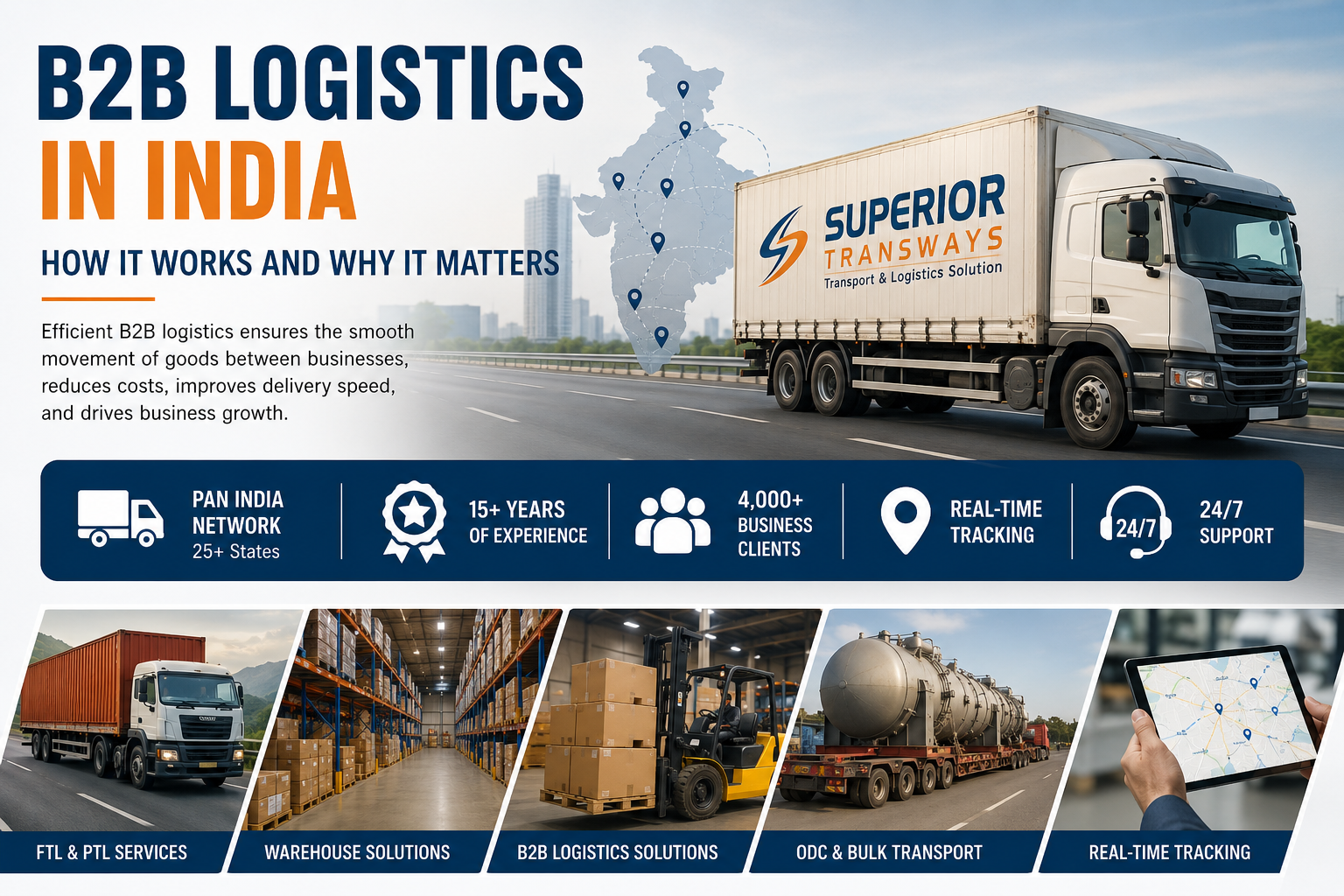
✔ PAN India operations across 25+ states
✔ 15+ years of logistics and transportation expertise
✔ Trusted by 4,000+ business clients
✔ Real-time shipment tracking
✔ Safe and secure cargo handling
✔ 24/7 customer support
✔ Flexible FTL, PTL, ODC, and bulk transportation solutions
Based in Vasai, Mumbai, Superior Transways helps manufacturers, retailers, distributors, and industrial businesses streamline their logistics operations with reliable transportation services.
Whether you require regular freight movement or specialized logistics support, their experienced team ensures timely and cost-effective delivery solutions.
Suggested Internal Links:
- https://superiortransways.com/b2b-logistics
- https://superiortransways.com/logistics-services
- https://superiortransways.com/ftl-services
Frequently Asked Questions (FAQs)
What is B2B logistics?
B2B logistics refers to the transportation, storage, and management of goods between businesses. It includes warehousing, freight transportation, inventory management, and supply chain coordination.
Why is B2B Logistics in India important?
B2B Logistics in India helps businesses reduce costs, improve delivery performance, maintain inventory levels, and support expansion into new markets.
What industries use B2B logistics services?
Manufacturing, FMCG, retail, pharmaceuticals, automotive, engineering, and industrial sectors all depend heavily on professional logistics services.
What is the difference between B2B and B2C logistics?
B2B logistics involves large-volume shipments between businesses, while B2C logistics focuses on delivering products directly to individual consumers.
How can a logistics company improve supply chain efficiency?
A logistics company can optimize routes, provide real-time tracking, reduce transportation costs, improve delivery speed, and enhance inventory management.
Conclusion
As businesses continue to expand across India, efficient supply chain operations have become a competitive necessity. B2B Logistics in India plays a crucial role in ensuring smooth movement of goods, reducing operational costs, improving customer satisfaction, and supporting long-term business growth.
From warehousing and inventory management to freight transportation and real-time tracking, professional logistics solutions help businesses stay ahead in a fast-moving marketplace.