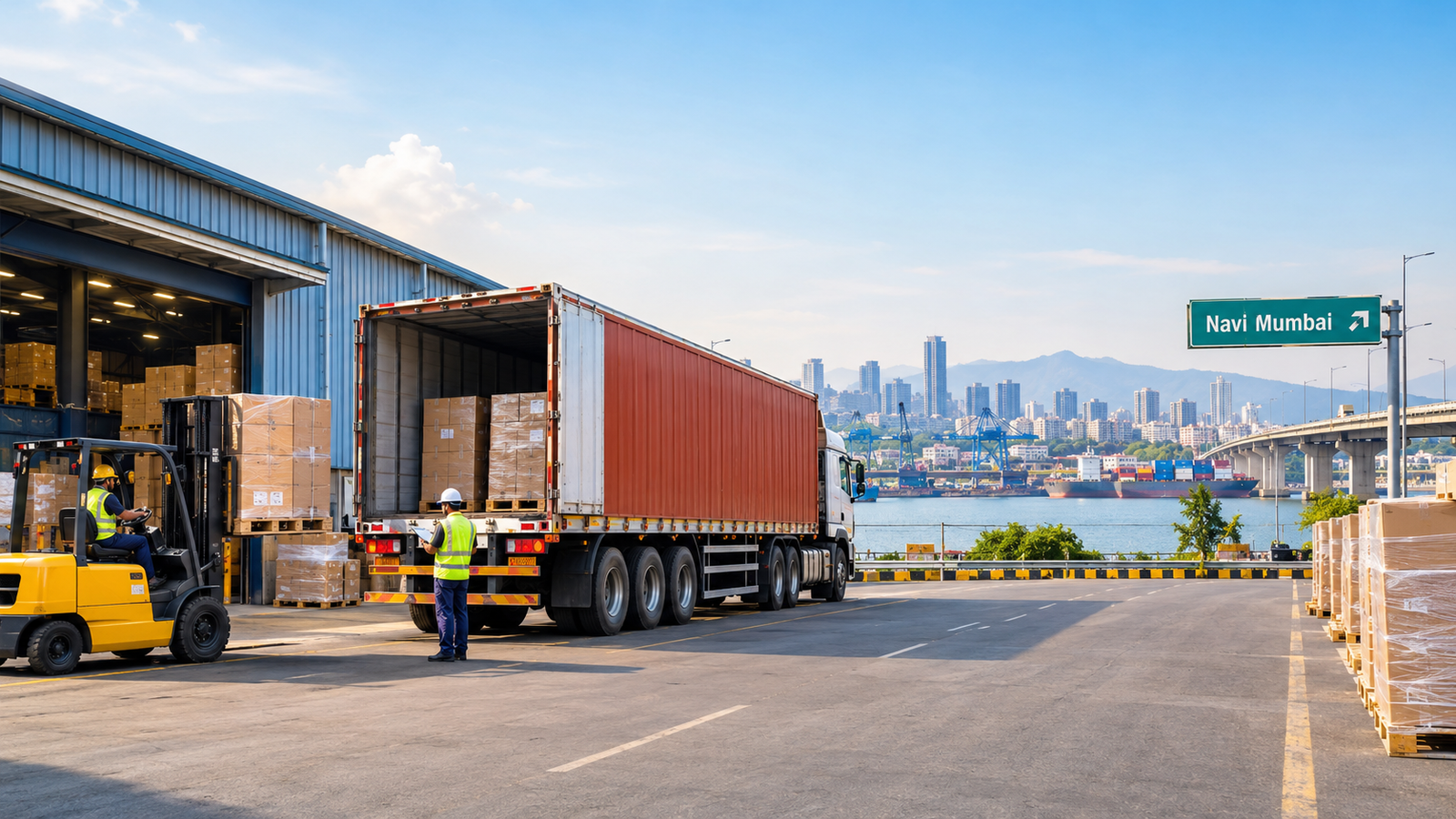
Navi Mumbai has become one of Maharashtra’s important commercial and industrial centres, supporting businesses across manufacturing, warehousing, wholesale trading, distribution and e-commerce. With its growing industrial infrastructure and connectivity to major transportation routes, the city plays an important role in moving goods between Mumbai, other parts of Maharashtra and destinations across India.
For businesses operating in this region, transporting goods is more than simply arranging a truck. Every shipment requires proper planning, suitable vehicle selection, accurate documentation, coordination with drivers and timely delivery management. Even a small mistake in the transportation process can result in delivery delays, additional expenses or damaged goods.
This is why choosing reliable Goods Transport Services in Navi Mumbai is essential for businesses that depend on regular and dependable cargo movement.
Whether you are transporting industrial materials, commercial products, machinery, packaged goods or bulk consignments, having a well-planned transportation process can make your supply chain more efficient.
In this guide, we will explain how to plan your shipment, select the right transport vehicle, understand transportation costs, prepare documents and choose a dependable logistics partner for smooth goods transportation.
Why Are Goods Transport Services Important for Businesses in Navi Mumbai?
Navi Mumbai is home to several industrial, commercial and warehousing locations, including Turbhe, Mahape, Taloja, Rabale, Airoli, Kalamboli, Panvel and surrounding business areas.
Businesses operating in these locations regularly transport raw materials, finished products, machinery, construction supplies and other commercial goods.
A reliable goods transportation service helps businesses maintain a consistent movement of products between suppliers, warehouses, factories, distributors and customers.
Here are some reasons why professional transportation services are important.
1. Timely Movement of Goods
Businesses often work according to fixed delivery schedules. Manufacturers need raw materials on time, distributors need products for their customers, and retailers depend on regular stock replenishment.
Professional transportation planning helps reduce unnecessary waiting time and improves delivery coordination.
2. Better Supply Chain Management
A well-organised transportation system allows businesses to move goods between multiple locations without disrupting their operations.
With proper vehicle selection, route planning and shipment coordination, companies can maintain a smoother supply chain.
3. Reduced Transportation Challenges
Managing transportation independently can involve several challenges, including vehicle availability, driver coordination, route selection, loading arrangements and delivery follow-ups.
Experienced transport service providers help businesses manage these activities through organised transportation support.
4. Safe Handling of Commercial Goods
Different products require different handling methods. Fragile goods, heavy machinery, industrial materials and packaged products cannot all be transported in the same way.
Selecting an appropriate vehicle and arranging proper loading and securing methods can reduce the chances of transit damage.
5. Transportation Across Multiple Locations
Businesses in Navi Mumbai frequently need to transport goods to Mumbai, Pune, Thane, Nashik, Gujarat, Karnataka, Delhi and other Indian destinations.
A transport partner with a wider delivery network can help businesses manage transportation requirements across different states.
Types of Goods Transport Services Available in Navi Mumbai
Before booking a transportation service, it is important to understand the available options. The right service depends on your shipment size, weight, delivery destination, cargo type and delivery schedule.
1. Full Truck Load (FTL) Transportation
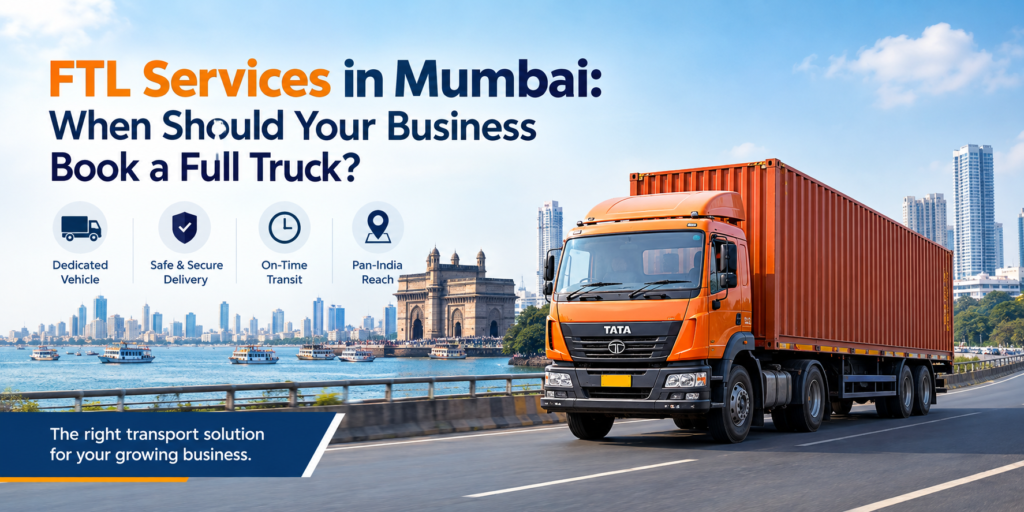
Full Truck Load, commonly known as FTL, is suitable for businesses that need an entire truck for their shipment.
Under FTL transportation, the vehicle is generally dedicated to one customer’s consignment rather than carrying multiple customers’ shipments.
It is useful for:
- Large commercial shipments.
- Industrial raw materials.
- Bulk products.
- Factory-to-warehouse transportation.
- Heavy or high-volume consignments.
- Regular business-to-business deliveries.
FTL transportation provides better control over vehicle movement and can reduce unnecessary handling associated with multiple loading and unloading points.
For businesses transporting large quantities of goods from Navi Mumbai to other cities, FTL can be a practical transportation option.
2. Part Truck Load (PTL) Transportation
Part Truck Load, or PTL, is suitable when a business has a smaller shipment that does not require the entire capacity of a truck.
Instead of booking a complete vehicle, businesses can use available truck space depending on the service provider’s network and shipment arrangements.
PTL can be useful for:
- Small and medium-sized consignments.
- Traders and distributors.
- Businesses with regular but limited shipment volumes.
- Commercial goods that do not require a dedicated truck.
However, businesses should confirm estimated transit time, handling arrangements and delivery schedules before choosing PTL transportation.
3. Over Dimensional Cargo (ODC) Transportation
Some shipments are too large, heavy or unusually shaped to fit into standard commercial vehicles.
Over Dimensional Cargo transportation is designed for such requirements.
Examples include:
- Industrial machinery.
- Large equipment.
- Manufacturing components.
- Construction machinery.
- Oversized industrial structures.
ODC transportation requires specialised vehicle selection, route assessment and applicable permissions depending on the dimensions, weight and route.
Businesses should provide accurate cargo measurements before requesting an ODC transportation quotation.
4. Tempo and Commercial Vehicle Hire
Businesses do not always require a large truck. Smaller commercial vehicles and tempos can be suitable for local transportation, short-distance deliveries and smaller consignments.
Tempo hire services are useful for:
- Local goods movement.
- Shop-to-warehouse deliveries.
- Small business transportation.
- Urgent commercial deliveries.
- Short-distance distribution.
Choosing a vehicle according to the shipment volume helps avoid unnecessary transportation expenses.
How to Plan Your Shipment with Goods Transport Services in Navi Mumbai
Planning a shipment properly can save time, reduce transportation complications and improve delivery reliability.
Here are the important steps every business should follow before booking goods transportation.
Step 1: Identify Your Shipment Requirements
The first step is to understand exactly what needs to be transported.
Before contacting a transporter, prepare the basic details of your consignment.
These include:
- Type of goods.
- Total shipment weight.
- Number of packages.
- Approximate dimensions.
- Loading location.
- Delivery location.
- Required delivery date.
- Special handling requirements.
For example, a manufacturer transporting 8 tonnes of packaged industrial products from Turbhe to Ahmedabad will have different vehicle requirements compared to a trader transporting a few pallets of products from Mahape to Pune.
Providing accurate shipment information allows the transporter to suggest a suitable vehicle and prepare a more realistic quotation.
Step 2: Choose the Right Type of Vehicle
Vehicle selection is one of the most important parts of shipment planning.
A vehicle that is too small may not accommodate the complete consignment, while a vehicle that is unnecessarily large can increase transportation expenses.
The vehicle should be selected according to cargo weight, dimensions, volume, loading requirements and route conditions.
Common commercial vehicle options include:
- 14 ft trucks for suitable smaller commercial consignments.
- 17 ft and 19 ft vehicles for medium-sized shipments.
- 20 ft trucks for larger commercial cargo.
- 22 ft and 32 ft vehicles for suitable high-volume consignments.
- 40 ft containers for compatible long-distance and large-volume transportation requirements.
These are general vehicle categories. Actual loading capacity and suitability depend on the vehicle configuration, permissible gross vehicle weight and cargo dimensions.
For example, a business transporting machinery should consider the dimensions and weight of the equipment instead of selecting a truck based only on its length.
An experienced transporter can help identify the appropriate vehicle for your shipment.
Step 3: Confirm the Pickup and Delivery Locations
Accurate pickup and delivery information helps avoid confusion during transportation.
Instead of providing only the area name, share the complete pickup and delivery addresses.
For example:
Pickup: Industrial unit in Taloja MIDC, Navi Mumbai.
Delivery: Warehouse in Bhiwandi, Maharashtra.
You should also confirm:
- Factory or warehouse entry requirements.
- Loading and unloading timings.
- Availability of loading equipment.
- Road access for heavy commercial vehicles.
- Contact person at both locations.
- Restrictions on vehicle entry.
Certain industrial areas and commercial premises may have specific entry timings or vehicle restrictions. Confirming these details in advance helps prevent unnecessary waiting.
Step 4: Select a Suitable Delivery Schedule
Delivery timelines depend on several factors, including distance, traffic, road conditions, vehicle availability, loading time and destination-specific restrictions.
For this reason, businesses should discuss their expected delivery schedule with the transporter before confirming the booking.
When planning urgent shipments, consider the following:
- Required pickup date and time.
- Expected loading duration.
- Estimated transit time.
- Unloading arrangements.
- Destination operating hours.
- Possible route delays.
It is also advisable to maintain a reasonable time buffer for long-distance shipments.
Do not rely entirely on unrealistic delivery promises. A dependable transport provider should communicate practical timelines and provide updates if the schedule changes.
Step 5: Compare Transportation Quotations
Transportation costs can vary depending on the vehicle, distance, cargo specifications, route and service requirements.
Instead of comparing quotations only on the basis of the final price, understand what each quotation includes.
Ask the transporter about:
- Vehicle type and capacity.
- Freight charges.
- Loading and unloading expenses.
- Additional handling costs.
- Applicable tolls and other charges.
- Insurance arrangements.
- GST and other applicable taxes.
- Waiting or detention charges.
- Payment terms.
A lower quotation may not always represent the best value if it excludes important services or involves unclear additional charges.
Always request a clear quotation before confirming the shipment.
Step 6: Prepare the Required Documents
Documentation is an essential part of commercial goods transportation.
Depending on the nature and value of the goods, transaction type and applicable regulations, businesses may need to prepare documents such as:
Tax Invoice: Contains transaction details, product descriptions, quantities, taxable values and applicable tax information.
E-Way Bill: An electronic document required for the movement of goods when applicable under GST rules.
Delivery Challan: Used in certain situations where goods are moved without a conventional tax invoice, subject to applicable requirements.
Lorry Receipt (LR): A transportation document issued by the transporter acknowledging the goods accepted for carriage and recording relevant shipment details.
Purchase Order: Helps establish the commercial order details between the buyer and seller.
Before dispatch, ensure that the documentation is accurate and that the transporter has the necessary shipment information.
E-way bill requirements, exemptions and validity periods should be checked against the latest applicable GST rules.
Step 7: Ensure Proper Loading and Packaging
Even when a shipment is assigned the right vehicle, improper loading can create problems during transit.
Goods should be packed and secured according to their weight, shape, material and handling requirements.
Important precautions include:
- Use suitable packaging materials.
- Keep fragile goods properly protected.
- Distribute weight evenly.
- Avoid overloading the vehicle.
- Secure cargo using suitable ropes, straps or other restraints.
- Keep moisture-sensitive goods protected.
- Separate incompatible materials where necessary.
- Check the loading arrangement before dispatch.
For heavy machinery and industrial equipment, specialised loading arrangements may be required.
Proper loading and packaging help reduce damage risks and support safer transportation.
Step 8: Track Your Shipment and Maintain Communication
Shipment coordination should not end once the truck leaves the pickup location.
Businesses should maintain communication with the transporter and driver to understand the shipment’s progress.
Ask about:
- Vehicle dispatch confirmation.
- Driver and vehicle details.
- Expected arrival time.
- Transit updates.
- Any route-related delays.
- Delivery confirmation.
Regular updates help businesses coordinate warehouse operations, inform customers and prepare unloading arrangements.
A transporter offering shipment tracking and responsive support can make long-distance goods movement easier to manage.
Step 9: Verify Delivery and Close the Shipment
The final step is to confirm that the shipment has reached its destination safely.
Once the vehicle arrives, the receiving team should:
- Verify the number of packages.
- Check the condition of the goods.
- Compare delivered quantities with shipment documents.
- Record any visible damage or shortage.
- Obtain the required delivery acknowledgement.
- Inform the transporter about successful delivery.
Maintaining delivery records helps businesses resolve discrepancies and improves accountability in future shipments.
Major Industrial and Commercial Areas Requiring Goods Transport in Navi Mumbai
Navi Mumbai has several industrial and commercial locations where goods transportation is an important part of daily business operations.
1. Turbhe
Turbhe is an important commercial and industrial area with warehouses, trading businesses, distribution activities and industrial establishments.
Businesses operating here may require regular transportation of packaged goods, raw materials and commercial consignments to different cities.
2. Taloja MIDC
Taloja is known for its industrial activity, including manufacturing and chemical-related businesses.
Transportation requirements may involve industrial materials, machinery, packaged products and other commercial cargo.
Certain cargo categories may require specialised handling, compatible vehicles and applicable safety or regulatory arrangements.
3. Mahape
Mahape is a prominent business and industrial location with offices, warehouses, technology-related businesses and commercial establishments.
Companies in this area may require transportation support for equipment, commercial supplies and warehouse distribution.
4. Rabale
Rabale has a significant industrial presence, with businesses requiring the movement of raw materials, finished products and manufacturing supplies.
Reliable vehicle availability and planned pickup schedules are important for companies managing regular dispatches.
5. Kalamboli
Kalamboli is an important transportation and commercial location in the Navi Mumbai region.
Its connectivity to major road corridors makes it relevant for businesses involved in goods distribution, trading and long-distance transportation.
6. Panvel
Panvel serves as an important connectivity point for transportation towards several destinations in Maharashtra and other states.
Businesses operating in and around Panvel may require local, regional and interstate goods transportation services.
What Factors Affect Goods Transportation Costs in Navi Mumbai?
Transportation charges are not fixed for every shipment. The final cost depends on multiple factors.
Understanding these factors helps businesses plan their logistics budgets more effectively.
1. Distance Between Pickup and Delivery
The distance between the origin and destination is one of the primary factors affecting freight charges.
Longer transportation routes generally involve higher operating expenses, including fuel, tolls and vehicle utilisation costs.
2. Type of Vehicle Required
Different commercial vehicles have different operating costs and carrying capacities.
A smaller tempo and a large multi-axle truck cannot be expected to have the same transportation charges.
3. Shipment Weight and Dimensions
Heavy or oversized cargo may require specialised vehicles, additional equipment or route planning.
Even relatively lightweight goods can require a larger vehicle if they occupy significant loading space.
4. Type of Goods
Certain cargo types need additional precautions, specialised packaging or specific transportation arrangements.
Fragile, valuable, temperature-sensitive, hazardous or oversized goods may involve additional service requirements.
5. Loading and Unloading Requirements
If a shipment requires cranes, forklifts, labour or specialised loading arrangements, the total transportation expense may increase.
6. Delivery Urgency
Urgent transportation requirements may affect vehicle availability, scheduling and freight charges.
Businesses should communicate their delivery expectations early to avoid last-minute arrangements.
7. Route and Toll Expenses
Highway tolls, route restrictions, traffic conditions and other operational considerations can influence transportation costs.
For an accurate quotation, always provide complete shipment information rather than requesting a price based only on the destination.
How to Choose the Right Goods Transport Company in Navi Mumbai
Choosing a reliable transporter is just as important as selecting the right vehicle.
A professional logistics partner should understand your shipment requirements and provide clear communication throughout the transportation process.
Here are some important factors to evaluate.
1. Experience in Commercial Transportation
Look for a transporter with experience handling business-to-business shipments, industrial cargo and commercial goods.
Experience can help in selecting suitable vehicles and managing common transportation challenges.
2. Vehicle Availability
Check whether the company can arrange vehicles according to your shipment requirements.
This is especially important for businesses with large consignments or recurring transportation needs.
3. Pan-India Transportation Network
If your business supplies products outside Maharashtra, choose a transporter capable of supporting interstate transportation.
A wider network can simplify logistics coordination between different cities and states.
4. Transparent Pricing
A professional transport company should provide a clear quotation and explain additional charges wherever applicable.
Avoid confirming a shipment without understanding the agreed freight and payment terms.
5. Shipment Tracking and Communication
Regular updates help businesses remain informed about vehicle movement and delivery progress.
Choose a service provider that is responsive and provides relevant shipment information.
6. Safety and Insurance Arrangements
Ask about cargo protection, vehicle safety and available transit insurance arrangements.
Do not assume that transportation charges automatically include insurance. Confirm the coverage, exclusions, insured value and responsibility in writing.
7. Customer Support
Responsive customer support is important when a shipment experiences delays, route changes or delivery-related issues.
A dependable transporter should be accessible for updates and coordination.
Common Mistakes to Avoid When Planning a Goods Shipment
Even experienced businesses can encounter transportation problems due to poor planning.
Here are some common mistakes to avoid.
1. Providing Incorrect Shipment Details
Incorrect cargo weight, dimensions or package quantities can lead to vehicle mismatch and additional expenses.
2. Booking Transportation at the Last Minute
Last-minute bookings may reduce vehicle availability and create scheduling challenges.
3. Selecting a Vehicle Based Only on Price
A cheaper vehicle may not be suitable for your cargo. Always consider capacity, safety and delivery requirements.
4. Ignoring Documentation
Incomplete or incorrect documents can create compliance and transit-related complications.
5. Not Confirming Loading Arrangements
Unplanned loading can result in delays and additional charges at the pickup location.
6. Failing to Communicate Delivery Requirements
If the receiving warehouse has restricted timings, the transporter should know this before dispatch.
7. Not Confirming Insurance Coverage
Businesses should understand what protection is available during transit and arrange suitable coverage where required.
Avoiding these mistakes can make your transportation process more predictable and efficient.
Why Choose Superior Transways for Goods Transport Services in Navi Mumbai?
When businesses need dependable goods transportation, they require more than just a vehicle. They need a transportation partner who understands shipment planning, vehicle requirements, delivery coordination and customer communication.
Superior Transways provides professional transportation and logistics solutions for businesses looking to move goods from Mumbai and surrounding industrial areas to destinations across India.
Based in Vasai, Mumbai, Superior Transways supports businesses with transportation requirements through a growing network covering 25 states.
With a focus on reliable service, professional coordination and practical transportation solutions, the company serves different types of businesses, from small traders to large manufacturers.
Our Transportation Services
Full Truck Load (FTL): Suitable for businesses transporting large commercial consignments that require a dedicated vehicle.
Part Truck Load (PTL): Transportation solutions for smaller consignments that do not require an entire truck, subject to service availability.
Over Dimensional Cargo (ODC): Transportation arrangements for oversized machinery, equipment and specialised industrial cargo.
Tempo on Hire: Commercial vehicle arrangements for suitable local and short-distance transportation requirements.
Bulk Transportation: Solutions for businesses that need to move larger quantities of commercial goods.
Warehouse and Storage: Logistics support for businesses requiring warehousing and storage arrangements.
What Makes Superior Transways a Suitable Transportation Partner?
- Transportation services from Mumbai to destinations across India.
- A network covering 25 states.
- Multiple vehicle options for different commercial shipment requirements.
- Door-to-door pickup and delivery arrangements, subject to route and service availability.
- Shipment tracking support.
- Professional coordination and customer assistance.
- Insurance arrangements for eligible shipments, subject to applicable terms and coverage.
Whether you are transporting goods from Turbhe, Taloja, Mahape, Rabale, Kalamboli or Panvel, planning your shipment with an experienced transportation partner can make the process more organised.
For businesses looking for reliable goods transport services in Navi Mumbai, Superior Transways aims to provide practical transportation solutions that support smooth commercial operations.
Frequently Asked Questions About Goods Transport Services in Navi Mumbai
1. How can I book goods transport services in Navi Mumbai?
You can contact a transport company and provide your pickup address, delivery location, cargo type, shipment weight, dimensions and preferred delivery date. The transporter can then suggest a suitable vehicle and provide a quotation.
2. Which vehicle is suitable for transporting commercial goods?
The right vehicle depends on the cargo weight, dimensions, volume and transportation distance. Options may include tempos, 14 ft, 17 ft, 19 ft, 20 ft, 22 ft, 32 ft and 40 ft vehicles, depending on availability and suitability.
3. What is the difference between FTL and PTL transportation?
FTL means Full Truck Load, where a vehicle is dedicated to one customer’s shipment. PTL means Part Truck Load, where a customer books only the required portion of available truck capacity.
4. Can I transport goods from Navi Mumbai to other states?
Yes. Businesses can arrange interstate transportation from Navi Mumbai to various destinations across India through transport companies offering suitable interstate services.
5. What documents are required for goods transportation?
Depending on the shipment and applicable regulations, documents may include a tax invoice, e-way bill, delivery challan, lorry receipt and purchase order.
6. How are goods transportation charges calculated?
Transportation charges generally depend on the distance, vehicle type, cargo weight, dimensions, route, loading and unloading requirements, tolls and additional service requirements.
7. Can I arrange transportation for heavy machinery?
Yes. Heavy machinery can be transported using suitable commercial vehicles or specialised ODC arrangements, depending on its weight, dimensions and handling requirements.
8. Is shipment tracking available?
Shipment tracking and movement updates depend on the transport provider and the service arrangement. Confirm the available tracking and communication options before booking.
9. Do transport companies provide insurance for goods?
Some transport providers offer insurance arrangements or assist with transit insurance. Always confirm the policy, coverage limits, exclusions and claims procedure before dispatch.
10. Why should businesses choose a professional goods transport company?
A professional transport company can help with vehicle selection, shipment coordination, documentation guidance, loading arrangements and delivery communication, making goods movement easier to manage.
Conclusion
Planning a goods shipment involves several important decisions, from understanding cargo requirements and selecting the right vehicle to preparing documentation, arranging safe loading and monitoring delivery progress.
For businesses operating in Turbhe, Taloja, Mahape, Rabale, Kalamboli, Panvel and other commercial areas, choosing reliable Goods Transport Services in Navi Mumbai can improve transportation coordination and support smoother supply chain operations.
Instead of treating transportation as a last-minute activity, businesses should make it an organised part of their logistics planning.
If you are looking for dependable transportation solutions from Navi Mumbai to destinations across India, Superior Transways can help you plan your next shipment.
Contact Superior Transways for Your Transportation Requirements
Superior Transways
Phone: 77700 26141
Website: https://superiortransways.com
Email: superiortransways18@gmail.com
Address: Sai Dham Bldg, 002, Opp. Water Tank, Navghar, Vasai-Virar, Maharashtra 401208
Get in touch with our team to discuss your shipment requirements and receive a suitable transportation quotation.