How to Pack Goods for Safe Long-Distance Transport in India
Introduction
Whether you’re shipping industrial machinery from Mumbai to Delhi, FMCG products from Vasai to Bengaluru, or fragile electronics across India, poor packaging can lead to damaged goods, delayed deliveries, and unnecessary financial losses. Knowing how to pack goods for safe long-distance transport in India is one of the most important steps in ensuring your shipment reaches its destination safely and on time.
India’s logistics network covers thousands of kilometers and includes highways, rural roads, multiple loading points, varying weather conditions, and long transit times. Therefore, packaging isn’t just about protecting products—it is about protecting your business reputation and reducing operational costs.
From selecting the right packaging materials to proper palletization, labeling, and choosing an experienced logistics partner, every step matters. In this guide, we’ll explain the best practices followed by logistics professionals to help manufacturers, wholesalers, retailers, and supply chain managers transport goods safely across India.
Why Proper Packaging Matters for Long-Distance Transport in India
Transporting goods across India presents several unique challenges. Cargo often travels through multiple states, warehouses, and distribution hubs before reaching the final destination. During transit, shipments are exposed to vibration, stacking pressure, rough handling, sudden braking, and changing weather conditions.
Proper packaging significantly reduces these risks.
Well-packed goods help businesses:
- Minimize product damage
- Reduce insurance claims
- Prevent shipment delays
- Lower replacement costs
- Improve customer satisfaction
- Maintain brand reputation
For example, an electronics manufacturer shipping products from Mumbai to Hyderabad may experience losses if fragile components are packed in ordinary cartons without cushioning. Similarly, chemical drums transported from Gujarat to Chennai require leak-proof sealing and proper hazard labeling.
Businesses using professional B2B logistics services often see fewer damages because experienced logistics companies follow standardized cargo handling procedures.
Most importantly, proper packaging allows transport providers to stack cargo efficiently, maximizing vehicle utilization while maintaining cargo safety.
Choose the Right Packaging Materials for Different Types of Goods
Not every shipment requires the same packaging. The ideal material depends on the product’s weight, fragility, value, and transportation distance.
Corrugated Boxes
Suitable for:
- FMCG products
- Retail goods
- Pharmaceuticals
- Consumer electronics
Use heavy-duty multi-layer corrugated boxes for long-distance transport.
Wooden Crates
Ideal for:
- Industrial machinery
- Heavy equipment
- Engineering components
Wooden crates offer excellent protection against impact during loading and unloading.
Bubble Wrap & Foam
Recommended for:
- Glass items
- Medical devices
- Electronic equipment
- Laboratory instruments
These materials absorb shocks during transportation.
Stretch Film & Shrink Wrap
Used for:
- Palletized shipments
- Cartons
- Bulk inventory
Stretch wrapping prevents cartons from shifting during transit.
Waterproof Covers
Indian monsoons can damage exposed cargo. Waterproof tarpaulins and moisture-resistant packaging protect goods from rain and humidity, especially during interstate transportation.
Using high-quality materials may seem expensive initially, but it significantly reduces damage-related expenses over time.
Best Practices for Packing Goods Before Dispatch
Packaging is not only about choosing good materials. Following the correct packing process ensures cargo remains secure throughout the journey.
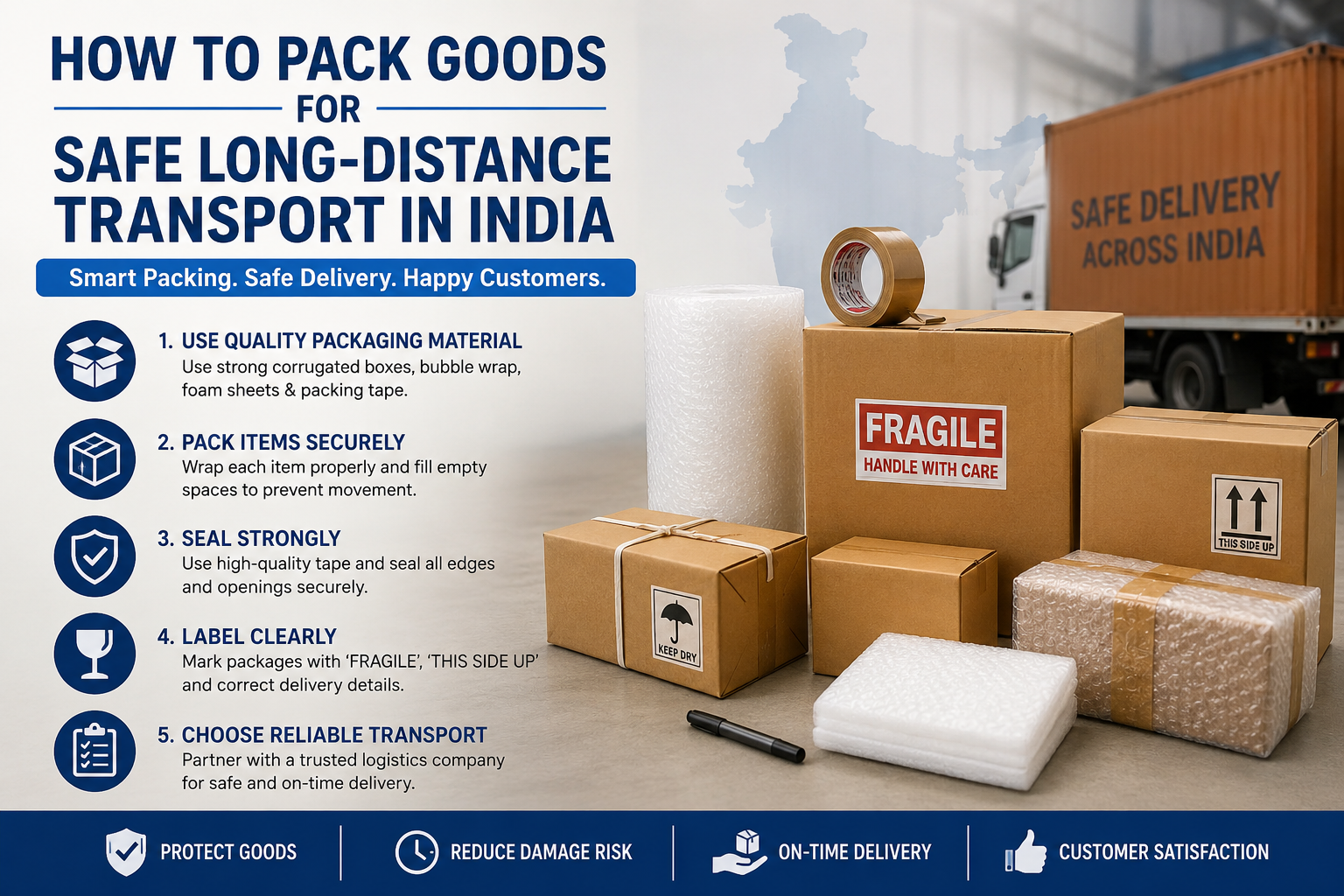
Fill Empty Spaces
Void spaces inside cartons allow products to move.
Use:
- Air pillows
- Foam sheets
- Kraft paper
- Bubble wrap
to prevent internal movement.
Distribute Weight Evenly
Heavy products should always be placed at the bottom of cartons. Uneven weight distribution increases the chances of cartons collapsing.
Seal Properly
Use industrial-grade packaging tape.
Apply tape in the “H” pattern across all carton openings for maximum strength.
Use Strong Pallets
Palletization improves loading efficiency and reduces manual handling.
Benefits include:
- Faster loading
- Better cargo stability
- Reduced handling damage
- Improved warehouse efficiency
Secure Cargo with Straps
For heavy shipments, use nylon or steel straps to secure cartons and machinery.
Proper packing before dispatch helps reduce damage throughout India’s extensive logistics network.
Labeling and Documentation Are Equally Important
Even perfectly packed goods can face delays or mishandling if labeling is incorrect.
Every shipment should clearly display:
- Consignee details
- Shipper information
- Contact numbers
- Destination city
- Invoice number
- Package count
- Gross weight
For fragile cargo, include labels such as:
- Fragile
- Handle with Care
- This Side Up
- Keep Dry
Businesses transporting chemicals or hazardous goods should follow applicable regulatory labeling requirements.
Documentation should include:
- Invoice
- E-way Bill
- Delivery Challan
- Transport Receipt
- Insurance Documents (where applicable)
Proper documentation speeds up interstate movement and minimizes delays at checkpoints.
Choose the Right Logistics Partner for Safe Transportation
Even excellent packaging cannot compensate for poor transportation practices.
An experienced logistics partner ensures:
- Safe loading
- Scientific cargo placement
- Route optimization
- Real-time shipment monitoring
- Professional unloading
- Timely delivery
Businesses transporting goods between Mumbai, Delhi, Ahmedabad, Pune, Bengaluru, Hyderabad, Chennai, Kolkata, Lucknow, Jaipur, Indore, Nagpur, or Guwahati benefit from logistics companies that understand India’s diverse transportation conditions.
When evaluating transport companies, consider:
- Fleet availability
- PAN India service network
- GPS tracking
- Cargo safety measures
- Dedicated customer support
- Experience in your industry
- Warehousing capabilities
Reliable freight transport involves much more than simply moving goods—it requires planning, coordination, and accountability.
Why Choose Superior Transways
When businesses require dependable long-distance logistics in India, Superior Transways has become a trusted logistics partner for manufacturers, distributors, retailers, and industrial businesses.
Based in Vasai, Mumbai, Superior Transways has successfully served 4,000+ business clients over the past 15+ years, delivering freight safely across 25+ Indian states.
Our comprehensive logistics solutions include:
- Full Truck Load (FTL) Services
- Part Truck Load (PTL) Services
- ODC Transportation
- Bulk Transportation
- B2B Logistics
- Warehouse Services
- Tempo on Rent
Why businesses choose Superior Transways:
- PAN India transportation network
- Experienced logistics professionals
- Safe cargo handling practices
- Real-time shipment tracking
- 24×7 customer support
- Timely deliveries
- Modern fleet management
- Flexible logistics solutions
Whether you’re transporting machinery, FMCG products, industrial goods, construction materials, or retail inventory, our experienced team ensures your cargo reaches its destination safely and efficiently.
Internal Link Suggestions:
Frequently Asked Questions
What is the safest way to pack goods for long-distance transport in India?
The safest approach includes using strong packaging materials, adequate cushioning, waterproof protection, proper palletization, secure sealing, and clear labeling. Choosing an experienced logistics company further reduces transit risks.
Why is palletization important in freight transport?
Palletization improves cargo stability, speeds up loading and unloading, reduces manual handling, minimizes product damage, and enhances warehouse efficiency during long-distance transportation.
Should fragile goods be packed differently?
Yes. Fragile items require bubble wrap, foam inserts, double-wall cartons, shock-absorbing materials, and “Fragile” labels to reduce the risk of breakage during transit.
Which industries require professional logistics packaging?
Manufacturing, pharmaceuticals, engineering, FMCG, automotive, chemicals, textiles, retail, electronics, and industrial equipment sectors all benefit from professional cargo packaging and transportation services.
How can businesses reduce damage during interstate transportation?
Businesses should use quality packaging materials, secure palletization, accurate labeling, proper documentation, and partner with reliable logistics providers offering real-time tracking and safe cargo handling.
Conclusion
Understanding how to pack goods for safe long-distance transport in India helps businesses minimize losses, improve delivery performance, and build customer trust. Investing in proper packaging, accurate labeling, and professional transportation services ensures shipments remain protected throughout their journey.
If your business requires reliable logistics solutions, Superior Transways is ready to help. With 15+ years of experience, a PAN India network covering 25+ states, 4,000+ satisfied business clients, real-time tracking, safe cargo handling, and 24/7 support, we provide dependable transportation solutions tailored to your business needs.