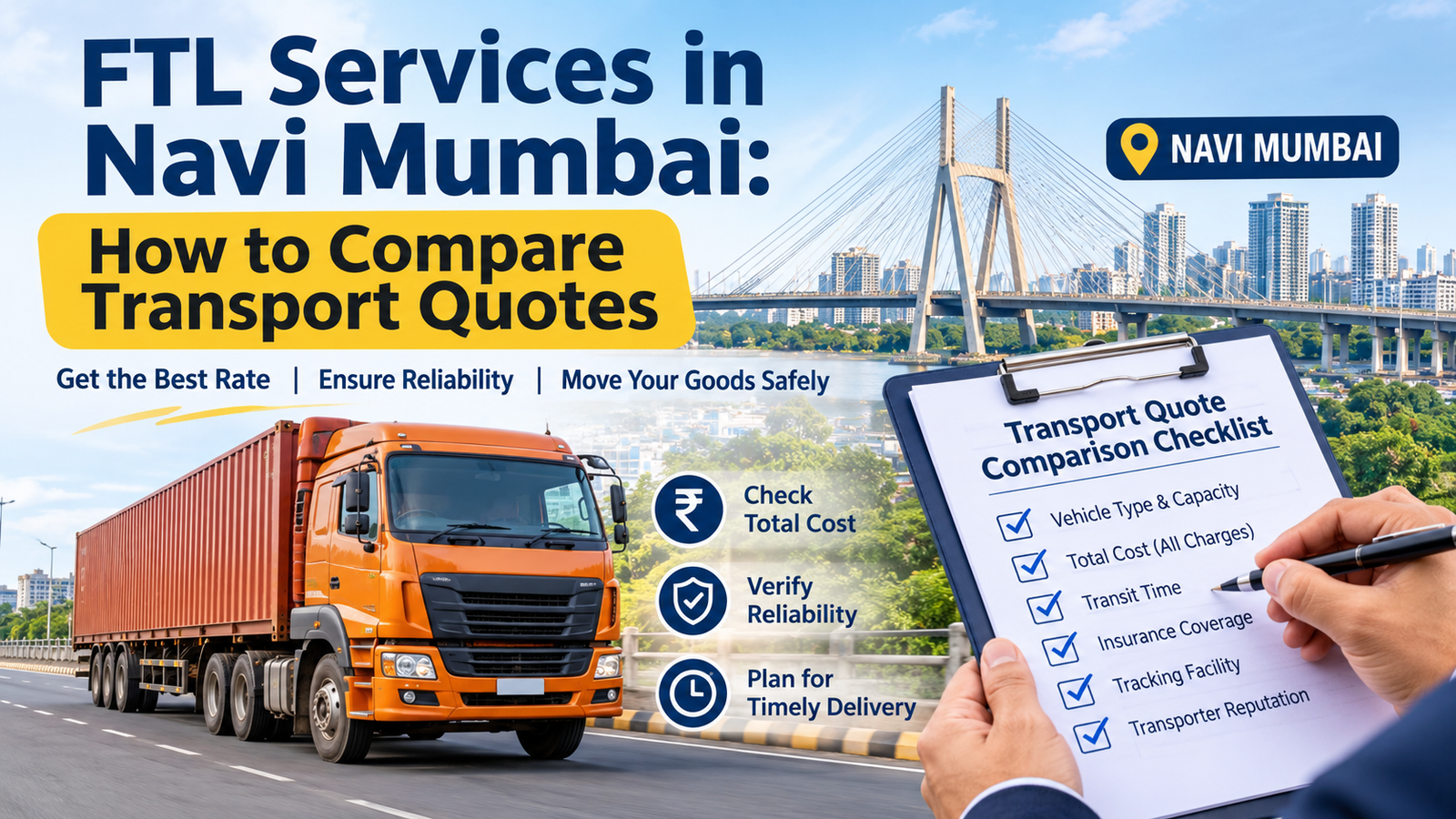
Businesses that regularly transport goods understand that choosing the right transportation partner is just as important as manufacturing or selling the products themselves. Whether you operate a manufacturing unit, wholesale business, distribution centre or trading company, transportation costs directly influence your overall operating expenses and delivery commitments.
When moving large quantities of goods between cities, Full Truck Load (FTL) transportation is often a practical solution. It provides a dedicated vehicle for a shipment, allowing businesses to plan their dispatches according to cargo requirements and delivery schedules.
However, finding reliable FTL Services in Navi Mumbai is not simply about contacting transporters and selecting the lowest quotation. Two transport companies may quote different prices for what appears to be the same shipment. The difference could come from vehicle capacity, route planning, toll charges, loading arrangements, transit time, insurance and additional service costs.
A quotation that initially appears cheaper may eventually become more expensive because of charges that were not discussed before booking.
For businesses operating in Navi Mumbai’s industrial and commercial areas, understanding how to evaluate freight quotations can help prevent unnecessary expenses, improve shipment planning and establish better relationships with transportation providers.
In this guide, we will explain how to compare FTL transport quotes, identify hidden charges, evaluate service providers and choose a transportation solution that offers the right balance between price, reliability and operational efficiency.
What Are FTL Services and Why Do Businesses Need Them?
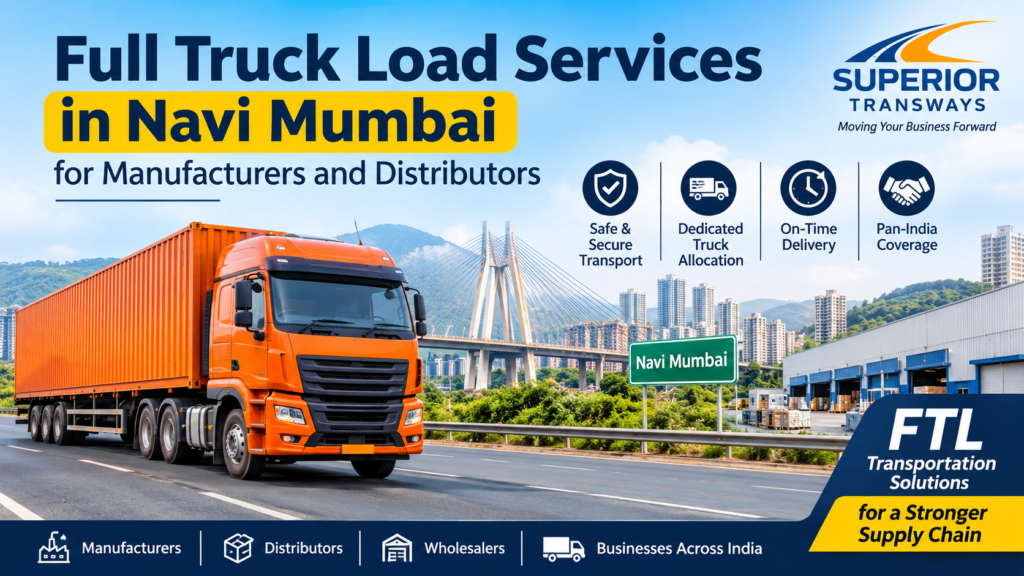
Full Truck Load (FTL) transportation is a goods transportation arrangement in which an entire truck is dedicated to carrying a particular shipment or customer’s cargo.
Unlike Part Truck Load transportation, where multiple consignments share vehicle space, FTL transportation generally involves one dedicated vehicle moving goods from the designated pickup location to the delivery destination.
Businesses commonly choose FTL services when they have:
- Large quantities of goods requiring a dedicated vehicle.
- Heavy or bulky commercial consignments.
- Regular factory-to-warehouse transportation requirements.
- Time-sensitive shipments.
- Goods that require specific loading arrangements.
- Shipments that should avoid unnecessary handling or transshipment.
For example, a manufacturing company in Taloja Industrial Area sending finished products to a distributor in Ahmedabad may prefer a dedicated truck instead of dividing the shipment between multiple vehicles.
Similarly, businesses operating in Mahape, Turbhe, Rabale, TTC Industrial Area and other commercial locations may require dedicated vehicles for regular intercity transportation.
How Does FTL Transportation Work?
The process generally involves the following steps:
- Shipment enquiry: The business shares its pickup location, delivery destination, cargo weight, dimensions and vehicle requirements.
- Vehicle selection: The transporter recommends a suitable truck based on the shipment.
- Freight quotation: The transportation company provides pricing and explains the applicable charges.
- Booking confirmation: Both parties agree on the vehicle, transportation cost, payment terms and delivery expectations.
- Vehicle placement: The truck reaches the pickup location according to the agreed schedule.
- Loading and dispatch: Goods are loaded, secured and dispatched with the necessary transportation documents.
- Transit monitoring: The shipment is monitored during transportation.
- Final delivery: Goods reach the destination, and proof of delivery is collected.
Understanding this process helps businesses identify which services are included in their quotation and which arrangements require additional payment.
Why Comparing FTL Transport Quotes Is Important
Transportation quotations are not always structured in the same way.
One transporter might provide an all-inclusive quotation, while another may quote only the basic freight amount. A third company might offer a lower rate but exclude toll charges, loading arrangements or detention expenses.
Comparing only the final numbers without understanding these differences can result in poor purchasing decisions.
Here are some reasons why comparing multiple quotations is important.
1. Better Control Over Transportation Expenses
Transportation expenses are a significant consideration for businesses that regularly move commercial goods.
Comparing quotations helps identify whether a transporter is offering a competitive price for the required vehicle, route and service conditions.
It also helps procurement teams prepare more accurate logistics budgets.
2. Avoiding Unexpected Charges
Additional expenses can arise from tolls, waiting time, loading and unloading, extra delivery points and other operational requirements.
When these charges are discussed before booking, businesses can estimate the actual transportation expense instead of dealing with unexpected bills later.
3. Understanding Service Quality
A low quotation does not automatically indicate a good transportation service.
A reliable transporter should provide clear communication, appropriate vehicles, shipment updates, proper documentation and a defined delivery process.
These operational factors are important when choosing FTL Services in Navi Mumbai for regular commercial shipments.
4. Improving Delivery Planning
Late deliveries can affect inventory availability, production schedules, distributor commitments and customer satisfaction.
Comparing transporters based on their route experience, vehicle availability and realistic transit estimates can help businesses select a more suitable service provider.
5. Building Long-Term Transportation Partnerships
Businesses with recurring shipment requirements benefit from working with transporters who understand their cargo, dispatch schedules and delivery expectations.
A transparent quotation process creates a better foundation for long-term commercial relationships.
10 Important Factors to Compare Before Choosing FTL Services in Navi Mumbai
When comparing transport quotations, businesses should evaluate more than the amount mentioned at the bottom of the document.
The following factors can help you make a more informed decision.
1. Compare the Exact Vehicle Type and Capacity
The first step is to confirm that every transporter is quoting for a suitable vehicle.
Different trucks have different dimensions, load capacities and operational requirements. Selecting an unsuitable vehicle can create loading problems, increase costs or delay dispatch.
Common commercial vehicle options include:
- 14-foot trucks.
- 17-foot trucks.
- 19-foot trucks.
- 20-foot trucks.
- 22-foot trucks.
- 32-foot single-axle or multi-axle vehicles.
- 40-foot container vehicles.
The availability and specifications of these vehicles depend on the transporter and operating requirements.
When comparing quotations, ask for:
- Vehicle length and body type.
- Permitted payload capacity.
- Open-body or container configuration.
- Loading height and usable cargo space.
- Axle configuration, where relevant.
- Suitability for your cargo dimensions.
- Accessibility at the pickup and delivery locations.
For example, a quotation for a 19-foot vehicle should not be directly compared with a quotation for a 32-foot vehicle without considering the difference in capacity.
The objective is to find a vehicle that matches your shipment without paying unnecessarily for unused capacity.
2. Compare the Complete Transportation Route
The distance and route between pickup and delivery locations influence freight pricing.
Even when two transporters are quoting for the same destination city, their pricing assumptions may differ.
Factors affecting route-based transportation expenses include:
- Total road distance.
- Highway and toll expenses.
- Road conditions.
- Traffic congestion.
- Restricted vehicle movement.
- Industrial area access.
- Additional pickup or delivery points.
- Route-specific operational requirements.
For example, a shipment travelling from Navi Mumbai to Pune may have different operational requirements from one travelling to Hyderabad, Ahmedabad or Bengaluru.
Always confirm the exact pickup and delivery addresses or PIN codes.
Also ask whether the quotation includes door-to-door transportation or whether the price covers only a specific transportation point.
Comparing quotations based on identical routes makes the evaluation more accurate.
3. Check Whether Toll Charges Are Included
Toll charges are an important part of long-distance road transportation expenses.
Depending on the route and vehicle category, toll expenses can influence the final freight amount.
Some transportation companies include toll charges in their quoted price, while others charge them separately based on actual expenses.
Before confirming a booking, ask:
- Are all applicable toll charges included?
- Will toll expenses be billed separately?
- Are additional route diversions chargeable?
- Will supporting toll records be available where applicable?
Suppose one transporter quotes ₹45,000 with toll charges included, while another quotes ₹42,000 with toll charges excluded.
The second quotation may not actually be cheaper.
Always compare the final payable amount rather than the basic freight figure.
4. Understand Loading and Unloading Charges
Loading and unloading arrangements can significantly affect the total cost of commercial transportation.
Some businesses have their own labour teams and loading equipment, while others require the transporter to arrange these services.
For heavy industrial goods, loading may also require forklifts, cranes or other lifting equipment.
Before selecting a quotation, clarify:
- Who will arrange loading labour?
- Who will arrange unloading labour?
- Are forklift or crane charges included?
- Are special handling requirements chargeable?
- Is packaging or additional cargo securing required?
- Are loading and unloading included at both locations?
These details should be clearly mentioned in the quotation.
A transporter offering a lower freight rate but excluding both loading and unloading may ultimately cost more than a provider offering a comprehensive service.
5. Check Detention and Waiting Charges
Detention refers to the additional charges applicable when a truck remains at a pickup or delivery location beyond the agreed free waiting period.
For example, a vehicle may reach a factory at 10 AM but remain there until evening because the goods are not ready for loading.
Similarly, a truck may reach a destination warehouse but wait several hours because the receiving team is unavailable.
Such delays can affect the vehicle’s next assignment and increase transportation expenses.
Before booking, clarify:
- How many free waiting hours are provided?
- Are loading and unloading waiting periods calculated separately?
- What is the detention charge after the free period?
- Is detention calculated hourly or daily?
- How is waiting time documented?
- Are overnight waiting charges applicable?
Businesses should share realistic loading and unloading schedules with their transporters to minimise unnecessary detention expenses.
6. Compare Transit Time and Delivery Commitments
Transportation speed is another important factor when comparing FTL quotations.
A transporter may offer a lower freight rate but provide a longer estimated transit time.
For businesses handling inventory-sensitive products, delayed deliveries can affect production, stock availability and customer commitments.
Ask every transporter to provide:
- Expected vehicle reporting time.
- Estimated dispatch time.
- Approximate transit duration.
- Expected delivery window.
- Updates in case of unexpected delays.
- Communication arrangements during transit.
Remember that estimated transit time is not necessarily a guaranteed delivery commitment.
Weather, traffic, road conditions, regulatory restrictions and operational delays can affect transportation schedules.
Choose a transporter who provides realistic expectations rather than making unrealistic delivery promises.
7. Evaluate Insurance and Cargo Safety
Cargo safety should be an important consideration when choosing FTL transportation.
Businesses transporting valuable goods should understand the difference between vehicle insurance and goods-in-transit insurance.
Vehicle insurance generally protects the vehicle under its policy terms. It does not automatically mean that the customer’s goods are insured for their full value.
Before booking, confirm:
- Whether transit insurance is included.
- The insured value of the shipment.
- The type of risks covered.
- Applicable exclusions and deductibles.
- Who arranges the policy.
- The process for reporting and handling claims.
For high-value industrial goods, electronics, machinery and commercial inventory, appropriate cargo insurance can help manage financial exposure.
Never assume that a shipment is fully insured simply because a transporter mentions insurance in its quotation.
Request the relevant coverage details in writing.
8. Check Tracking and Shipment Visibility
Shipment visibility allows businesses to monitor the movement of their goods and coordinate with receiving teams.
For companies transporting goods over long distances, tracking can improve communication and make delivery planning easier.
Before finalising a transportation partner, ask:
- Is GPS-based vehicle tracking available?
- Are dispatch updates shared?
- Can the transporter provide estimated arrival information?
- Who should be contacted during transit?
- How are unexpected delays communicated?
- Is delivery confirmation provided?
A transporter with a structured communication process can make shipment management more convenient for business owners and logistics managers.
9. Review Payment Terms and Quotation Validity
Payment conditions can vary between transportation companies.
Some transporters may require an advance payment before vehicle placement, while others may offer credit arrangements to established business customers.
Before accepting a quotation, review:
- Advance payment requirements.
- Balance payment schedule.
- Credit period, if applicable.
- Accepted payment methods.
- Applicable GST treatment.
- Additional charges and billing conditions.
- Quotation validity period.
Transportation rates can change depending on operating expenses, vehicle availability and market conditions.
Therefore, confirm how long the quoted rate remains valid and whether any conditions can lead to a revision.
For recurring transportation requirements, businesses can discuss mutually agreed pricing arrangements with their service provider.
10. Evaluate the Transporter’s Experience and Reliability
The final comparison should include the transportation company’s ability to execute the shipment.
A transporter offering a competitive price may not necessarily have the operational capacity required for your business.
Consider the following:
- Experience handling commercial shipments.
- Availability of suitable vehicles.
- Network coverage across destinations.
- Driver and vehicle coordination.
- Documentation process.
- Shipment communication.
- Customer support availability.
- Handling of delayed or damaged shipments.
- References or feedback from existing customers.
A dependable transportation partner should be able to explain its processes clearly and respond to operational queries.
This is particularly important for businesses that require regular FTL transportation rather than occasional vehicle bookings.
Understanding the Hidden Costs in FTL Transportation Quotes
One of the most common mistakes businesses make is comparing only the base freight amount.
A quotation may appear affordable initially but include several exclusions that increase the final transportation expense.
Here are some additional charges worth checking.
Toll and Highway Expenses
These expenses arise during road transportation and may be included in the basic freight amount or charged separately.
Loading and Unloading Labour
Labour costs depend on the nature of the cargo, weight, quantity and loading arrangements.
Detention Charges
Additional waiting time beyond the agreed free period may attract charges.
Insurance Expenses
If goods-in-transit insurance is arranged separately, the applicable premium may increase the shipment cost.
Additional Pickup and Delivery Points
If a shipment requires multiple stops, the transporter may charge extra for additional distance and handling.
Night-Halt Expenses
Unexpected overnight waiting or operational requirements may result in additional costs, depending on the agreed terms.
GST and Other Applicable Taxes
The applicable GST treatment depends on the nature of the transportation service, the Goods Transport Agency arrangement and the applicable tax provisions.
Businesses should confirm whether GST is included in the quotation, whether it is payable under reverse charge or forward charge, and how it affects the final invoice.
Tax treatment should be verified with the transporter and the business’s tax adviser.
The important principle is to identify all applicable charges before approving the quotation.
How to Calculate and Compare the Actual FTL Transportation Cost
Once you have received multiple quotations, organise the information in a common format.
Consider the following illustrative example.
A manufacturing company in Navi Mumbai wants to transport finished goods to a warehouse in Ahmedabad.
It receives three quotations from different transportation providers.
| Cost component | Transporter A | Transporter B | Transporter C |
|---|---|---|---|
| Basic freight | ₹45,000 | ₹42,000 | ₹47,000 |
| Toll charges | Included | ₹3,500 | Included |
| Loading | ₹2,000 | ₹2,000 | Included |
| Unloading | ₹1,500 | ₹1,500 | Included |
| Other agreed charges | ₹0 | ₹0 | ₹0 |
| Subtotal | ₹48,500 | ₹49,000 | ₹47,000 |
Illustrative figures only. GST and any other applicable charges are excluded.
Based on this example:
- Transporter A offers a total of ₹48,500.
- Transporter B offers a total of ₹49,000.
- Transporter C offers a total of ₹47,000.
At first glance, Transporter B appeared to be the cheapest because its basic freight was only ₹42,000.
However, after adding the applicable expenses, it becomes the most expensive option in this comparison.
Transporter C offers the lowest illustrated total, but the business should still verify vehicle suitability, service quality, insurance, delivery expectations and other quotation conditions before booking.
This example demonstrates why businesses should compare the complete transportation cost rather than the headline freight rate.
Why the Cheapest FTL Quote Is Not Always the Best Choice
Choosing a transporter solely based on price can create operational problems.
Imagine a distributor who saves ₹2,000 on transportation but experiences a delivery delay that affects the availability of products at its warehouse.
The initial saving may become insignificant compared with the business impact of the delay.
Similarly, a company transporting machinery may prefer a slightly higher quotation from a provider that understands the cargo’s loading and securing requirements.
The right transportation partner should provide a suitable combination of:
Competitive Pricing: Transparent and reasonable transportation charges.
Vehicle Availability: Access to vehicles that match shipment requirements.
Reliable Operations: Proper coordination between pickup, dispatch and delivery.
Cargo Safety: Appropriate loading, securing and insurance arrangements.
Communication: Timely updates and accessible customer support.
Documentation: Proper transport records and proof of delivery.
Businesses should evaluate these factors according to their shipment priorities.
The objective is not simply to spend less on freight. It is to ensure that goods reach their destination safely, efficiently and at a predictable cost.
Why Navi Mumbai Businesses Need a Reliable FTL Transportation Partner
Navi Mumbai has several important industrial, commercial and warehousing locations that support manufacturing, distribution and trading activities.
Areas such as Taloja, Mahape, Turbhe, Rabale, Ghansoli, Kopar Khairane and TTC Industrial Area have businesses with different transportation requirements.
Manufacturers may need to move raw materials and finished products, while distributors may require regular stock replenishment across different cities.
For such businesses, a reliable FTL service provider can simplify transportation planning.
Transportation for Manufacturers
Manufacturing businesses often require dedicated vehicles for moving finished goods from factories to warehouses, distributors and other industrial facilities.
The right vehicle, loading arrangements and dispatch coordination are essential for smooth transportation.
Transportation for Wholesalers and Distributors
Wholesalers and distributors may have recurring shipments to multiple markets.
A dependable transportation arrangement helps them plan inventory replenishment and coordinate deliveries with their customers.
Transportation for Industrial and Heavy Goods
Some shipments involve machinery, equipment, oversized components and other industrial materials.
These consignments may require specialised vehicle selection, careful loading and additional transportation planning.
Transportation for Regular Commercial Dispatches
Businesses with frequent shipments can benefit from establishing long-term arrangements with transportation providers.
Consistent communication, predictable billing and vehicle availability can make recurring transportation easier to manage.
Documents to Check Before Confirming an FTL Booking
Documentation is another important part of commercial goods transportation.
Before dispatch, businesses should coordinate with their transporter to ensure that the necessary documents are available.
Depending on the nature of the shipment and applicable requirements, these may include:
- Tax Invoice: Commercial invoice containing the relevant transaction and goods details.
- Delivery Challan: Used where applicable for the movement of goods.
- E-Way Bill: Required for applicable goods movements under GST rules, subject to prescribed conditions and exemptions.
- Lorry Receipt (LR): Transportation document containing relevant consignment and movement details.
- Vehicle Details: Registration number and other relevant vehicle information.
- Proof of Delivery (POD): Confirmation that the shipment has reached the intended recipient.
- Insurance Documents: Relevant transit insurance documentation where coverage is arranged.
Businesses should verify document requirements before dispatch rather than waiting until the truck reaches the pickup location.
Proper documentation helps reduce avoidable delays and supports smoother communication between consignors, transporters and consignees.
How to Prepare a Request for Quotation (RFQ) for FTL Services
If you want accurate quotations from different transporters, provide the same shipment information to every service provider.
An incomplete enquiry can lead to different assumptions and inconsistent pricing.
Here is the information you should share when requesting FTL quotations.
1. Pickup and Delivery Details
Mention the complete pickup and delivery locations, including PIN codes.
2. Cargo Description
Explain what goods need to be transported.
For example, finished products, industrial machinery, packaging materials, raw materials or commercial inventory.
3. Shipment Weight and Dimensions
Provide the total weight, number of packages and approximate dimensions.
This helps the transporter recommend a suitable vehicle.
4. Vehicle Requirement
Mention your preferred truck type or ask the transporter to recommend the right vehicle based on the shipment.
5. Loading and Unloading Arrangements
Specify whether labour, forklifts, cranes or other equipment will be provided by your business.
6. Dispatch Schedule
Mention when the goods will be ready for pickup and whether there are specific delivery deadlines.
7. Additional Requirements
Inform the transporter about insurance, tracking, special handling, additional stops or other requirements.
8. Commercial Terms
Ask for the complete freight quotation with all applicable inclusions, exclusions, taxes and payment conditions.
Providing identical information to multiple transporters creates a fair basis for comparing quotations.
FTL vs PTL: Which Transportation Option Should Your Business Choose?
Businesses comparing transportation costs should also understand the difference between Full Truck Load and Part Truck Load services.
Both options serve different shipment requirements.
| Comparison | FTL Transportation | PTL Transportation |
|---|---|---|
| Vehicle usage | Dedicated vehicle | Shared vehicle space |
| Best suited for | Large or dedicated shipments | Smaller consignments |
| Cargo handling | Generally fewer handling points | May involve additional handling |
| Pricing | Usually quoted per dedicated trip | Commonly based on chargeable shipment parameters |
| Transit planning | Direct movement is possible | May involve consolidation |
| Vehicle control | Dedicated to the shipment | Shared with other consignments |
FTL is often suitable when the shipment requires a dedicated vehicle, while PTL can be more practical for smaller consignments that do not require the full truck capacity.
However, the decision should consider shipment dimensions, cargo type, delivery urgency and total cost.
You can also explore Full Truck Load (FTL) Transportation and Part Truck Load (PTL) Transportation to understand which option better matches your shipment requirements.
Why Choose Superior Transways for FTL Services in Navi Mumbai?
Choosing a transportation partner involves more than comparing freight rates.
Businesses need a service provider that understands commercial transportation requirements and can coordinate shipments across different destinations.
Superior Transways is a Mumbai-based transportation and logistics company operating from Vasai, Maharashtra, with a transportation network covering 25 states across India.
With experience serving more than 4,000 clients, the company works with businesses ranging from small traders to established manufacturers.
For businesses looking for FTL Services in Navi Mumbai, Superior Transways focuses on providing transportation solutions for commercial and industrial shipments.
1. Transportation Across India
Businesses often require transportation beyond Maharashtra.
A wider network can help coordinate goods movement from Navi Mumbai to different commercial and industrial destinations across India.
2. Multiple Vehicle Requirements
Different shipments require different vehicle configurations.
Businesses can discuss their cargo weight, dimensions and delivery requirements to identify a suitable transportation option.
3. Door-to-Door Transportation
Coordinated pickup and delivery arrangements can make goods transportation more convenient for businesses.
4. Shipment Tracking Support
Shipment updates and tracking support help businesses coordinate with their receiving teams and plan deliveries.
5. Cargo Safety and Insurance Support
Businesses can discuss applicable insurance arrangements and coverage details before dispatch to understand the protection available for their consignments.
6. Customer Support
Clear communication is important throughout the transportation process.
From initial enquiry to delivery coordination, businesses should have access to support for their shipment-related queries.
If your business regularly transports goods from Navi Mumbai to other cities, contact Superior Transways to discuss your shipment requirements and request a suitable transportation quotation.
Final Checklist: Before Approving an FTL Transport Quotation
Before confirming your next shipment, use this checklist to evaluate the available quotations.
Is the vehicle suitable for the cargo weight and dimensions?
Are the pickup and delivery addresses correct?
Are all quotations based on the same route?
Are toll charges included or excluded?
Are loading and unloading charges clearly mentioned?
Are detention and waiting charges defined?
Is the estimated transit time realistic?
Are insurance arrangements clearly explained?
Is shipment tracking available?
Are GST and other applicable taxes clarified?
Are payment terms and quotation validity mentioned?
Is the transporter experienced in handling similar shipments?
Is the final payable amount clearly documented?
Once these details are confirmed, you can compare transportation providers on a more reliable and transparent basis.
Conclusion
Finding the right FTL Services in Navi Mumbai requires a careful evaluation of pricing, vehicle capacity, route planning, additional charges and service reliability.
The lowest quotation may appear attractive, but it does not always represent the lowest actual transportation expense.
Businesses should compare freight quotations using identical shipment details and examine every applicable charge before making a booking decision.
Factors such as loading and unloading, tolls, detention, insurance, tracking, documentation and delivery expectations should all form part of the evaluation.
For manufacturers, distributors, wholesalers and traders, selecting a dependable transportation partner can improve shipment coordination, reduce avoidable expenses and support smoother business operations.
If you are planning a commercial shipment from Navi Mumbai to another destination in India, Superior Transways can help you explore suitable transportation arrangements.
Looking for reliable FTL transportation? Contact Superior Transways today for a transportation quotation based on your vehicle, cargo and delivery requirements.
Frequently Asked Questions (FAQs)
1. What are FTL Services in Navi Mumbai?
FTL Services in Navi Mumbai refer to Full Truck Load transportation solutions where a dedicated vehicle is arranged to transport a business’s shipment from Navi Mumbai to its destination. These services are commonly used by manufacturers, wholesalers, distributors and industrial businesses.
2. How do I compare FTL transportation quotes?
Compare the vehicle type, load capacity, pickup and delivery locations, toll charges, loading and unloading expenses, detention terms, insurance, transit time and payment conditions. Always calculate the final payable amount instead of comparing only the basic freight rate.
3. What factors affect FTL transportation charges?
FTL transportation charges depend on route distance, vehicle type, cargo weight, vehicle availability, fuel expenses, tolls, loading requirements, delivery timelines and other operational factors.
4. Which truck is suitable for Full Truck Load transportation?
The appropriate truck depends on cargo weight, dimensions, volume, loading requirements and route conditions. Businesses should provide complete shipment details to their transporter before selecting a vehicle.
5. Are toll charges included in FTL transportation quotations?
Toll charges may be included in the basic freight quotation or billed separately. Businesses should confirm the toll arrangement before booking to avoid unexpected transportation expenses.
6. Is insurance included in FTL services?
Insurance arrangements differ between transportation providers. Vehicle insurance does not automatically cover the customer’s goods. Businesses should confirm whether goods-in-transit insurance is included and review the applicable coverage.
7. Can I track my FTL shipment during transportation?
Many transportation providers offer GPS tracking or shipment updates. Tracking availability and the frequency of updates should be confirmed before booking.
8. Is FTL better than PTL for commercial shipments?
FTL is generally suitable for large shipments requiring a dedicated vehicle, while PTL is often appropriate for smaller consignments that can share vehicle space. The right choice depends on cargo size, delivery requirements and total transportation cost.
9. Which areas in Navi Mumbai require FTL transportation services?
Businesses operating in Taloja, Mahape, Turbhe, Rabale, Ghansoli, Kopar Khairane and TTC Industrial Area may require FTL transportation for moving industrial goods, raw materials and finished products.
10. How can I request an FTL transportation quotation from Superior Transways?
You can contact Superior Transways with your pickup and delivery locations, cargo weight, shipment dimensions, vehicle requirements and expected dispatch date to discuss a suitable transportation quotation.
Contact Superior Transways
Superior Transways
📞 Phone: 77700 26141
🌐 Website: https://superiortransways.com
📧 Email: superiortransways18@gmail.com
📍 Address: Sai Dham Bldg, 002, Opp. Water Tank, Navghar, Vasai-Virar, Maharashtra 401208
Your Goods. Our Responsibility. Reliable Transportation Across India.